From Group Chat to Sportsbook: How Venmo Turned Your Friends Into Your Bookie
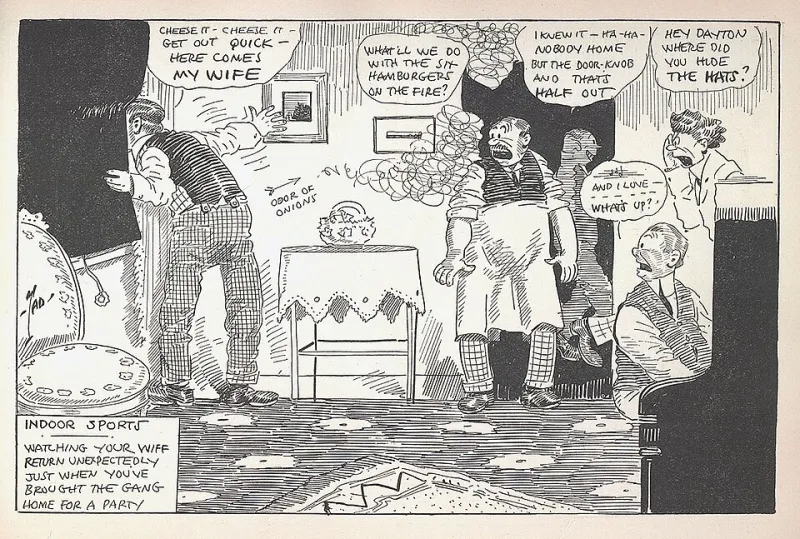
Photo: Tad Dorgan, Public domain, via Wikimedia Commons
It started innocently enough. A Sunday afternoon, a few beers, somebody says "hey, wanna throw ten bucks on this game together?" You Venmo your buddy half the stake, he places the bet, and suddenly you're both screaming at a television in ways that would concern a licensed therapist. You win. You split the payout. Life is beautiful.
That was eighteen months ago. Now you have a running spreadsheet, three separate group chats organized by sport, and a standing policy about how parlay winnings get divided when someone drops out of a leg after the ticket is already submitted. You didn't build a gambling problem. You built a system. And like every system built by degens, it is held together entirely by vibes and someone's Notes app.
Welcome to the Venmo Spiral — the slow, beautiful, catastrophic evolution of casual bet-splitting into a fully operational shadow sportsbook run out of your friend group's collective stupidity.
The Infrastructure Built Itself While You Weren't Paying Attention
Here's the thing nobody tells you about splitting bets with friends: mobile payment apps didn't just make the money part easier, they removed the only real friction that kept casual gambling casual. Before Venmo and Cash App, settling up required actual cash, actual proximity, and actual awkward conversations. That friction was load-bearing. It was the only thing stopping your buddy group from turning a Super Bowl squares pool into a year-round enterprise.
Now? You can fund a three-leg Saturday college basketball parlay in the time it takes to microwave a Hot Pocket. The money moves instantly, the receipts are right there in the app, and the whole thing feels less like gambling and more like splitting a Uber. Except the Uber occasionally pays you four hundred dollars and sometimes dumps you in a ditch.
The payment infrastructure normalized the behavior. Once you've sent and received betting money through the same app you use to pay for pizza, the psychological barrier between "fun bet" and "financial obligation" quietly dissolves. Your brain stops registering it as gambling and starts filing it under "money stuff I do with my phone."
The Running Tab Is the Real Trap
Every group betting syndicate — and yes, that's what your friend group is now, a syndicate, congratulations — eventually develops a running tab. Instead of settling after every bet, someone suggests just keeping a mental (then digital) ledger and squaring up at the end of the week. Or the month. Or whenever someone actually needs the money.
This is the moment your group crossed a very important line. Because a running tab means you're no longer betting with money you have. You're betting with money you're owed, which is a completely different psychological animal. When you're down forty bucks on the tab, you're not losing real dollars — you're losing abstract credit that technically doesn't exist yet. Which makes it extremely easy to justify one more bet to claw back to even.
"Just one more to break even" is the most dangerous sentence in the English language. It is the rallying cry of every person who has ever turned a bad night into a catastrophic one. And the running tab is the machine that manufactures that sentence on an industrial scale.
Derek Owes Everyone and Nothing Will Ever Be Done About It
Every friend group betting ecosystem has a Derek. Derek is the guy who is always slightly behind on the tab, always has a reason why this week is a bad time to settle up, and always has a new bet idea that he'd like to use to "work off what he owes." Derek is not a bad person. Derek is a symptom.
The existence of Derek reveals something important about informal betting networks: there is zero enforcement mechanism. Real sportsbooks have terms of service, withdrawal holds, and legal recourse. Your friend group has vibes and the vague social pressure of seeing Derek at Kevin's birthday party next month. That's it. That's the whole system.
This means the group absorbs Derek's losses collectively, usually through a combination of him skipping bets when he's down and jumping back in enthusiastically when there's a potential big payout. The house always wins. In your friend group's case, the house is Derek, which is somehow worse.
The Psychological Architecture of Group Betting
What makes the friend group betting ecosystem so particularly sticky isn't the money — it's the social reinforcement loop. When you win, you're sharing the high with people who were in the foxhole with you. When you lose, you're commiserating with people who feel exactly as bad as you do. Every outcome becomes a shared emotional experience, which makes every bet feel more meaningful and every next bet feel more necessary.
Behavioral economists call this social facilitation. DegenPOV calls it "why you've watched more obscure Tuesday night basketball games this year than in the previous decade combined." The group creates accountability for placing bets while simultaneously eliminating accountability for the consequences. You have to bet the game — the group chat is counting on you. But when it loses, well, that's just something that happened to all of you together.
The group also creates a competitive element that has nothing to do with the actual games. Now you're not just trying to beat the spread — you're trying to have a better record than your friend who thinks he's some kind of analytics genius because he downloaded an app. This secondary competition keeps engagement levels artificially high long after the novelty of betting should have worn off.
How to Know When the Fun Stopped Being Fun
There's a version of this that's actually fine. Five friends, a reasonable pot, a designated "treasurer" who keeps things honest, and a firm settlement schedule. That's a social activity with a gambling element. Annoying to manage, but basically harmless.
You've crossed into different territory when: the tab hasn't been settled in over a month, someone has borrowed money to cover their share, the group has developed rules more complex than your actual lease agreement, or you've had a genuine argument about whether a bet "counts" based on some ambiguous language in the original text message.
If your friend group has ever had a formal dispute resolution process — even an informal one, even just "we'll let Mike decide" — you are no longer doing a fun casual thing. You are operating an unlicensed financial instrument, and Mike is your arbitration panel.
The Spiral Has a Floor, Probably
The Venmo Spiral doesn't end dramatically. It doesn't end with a single catastrophic loss or a tearful intervention. It ends slowly, the way all degen enterprises end — with attrition. Someone gets a girlfriend who asks too many questions about the Venmo notifications. Someone gets a new job with Sunday hours. Derek stops responding to the group chat entirely for three weeks and then reappears asking if anyone wants to split a March Madness bracket.
And then, inevitably, someone says "hey, there's a good game on Sunday, wanna throw ten bucks on it together?"
The infrastructure is already there. The group chat never died. The tab is technically still open.
Here we go again.